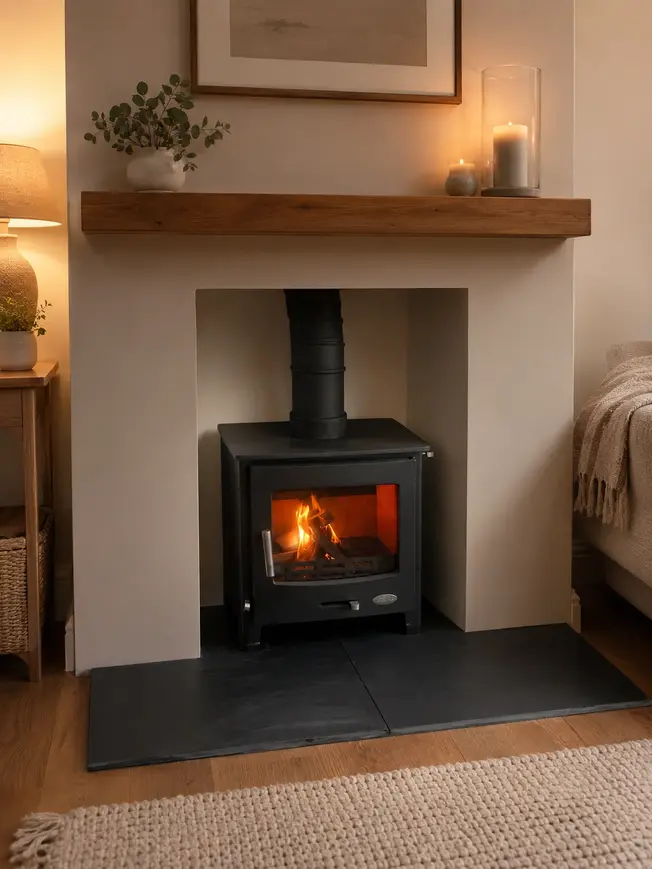
Woodburner vs Multi-Fuel Stoves: Which is Best for You?
If you’re adding a stove to your home, one of the first decisions is whether to choose a woodburner or a multi-fuel stove. Both offer efficient heating and character, but they differ in fuel flexibility, running costs, and upkeep. Norwich homeowners often base the choice on property size, lifestyle, and fuel availability.
This guide explains the differences so you can choose with confidence. When you’re ready, explore our woodburner installation service in Norwich or learn about our multi-fuel stove installations.
What Is a Woodburner?
A woodburner is designed specifically to burn logs. Modern Ecodesign-ready models are highly efficient and, when used with seasoned wood, produce far fewer emissions than open fires. They are simple, reliable, and admired for their clear flame view. The only limitation is that they cannot safely or legally burn other fuels.
- Pros: Simple to use, efficient with dry wood, fewer moving parts, attractive flame picture.
- Cons: Limited to burning wood only.
What Is a Multi-Fuel Stove?
A multi-fuel stove is designed to burn both logs and authorised smokeless fuels. These stoves include a raised grate and ash pan, allowing airflow beneath the fuel for effective combustion. The main advantage is fuel flexibility, which can be useful if wood supplies are limited or fuel prices fluctuate.
- Pros: Greater flexibility, option to choose between fuels, resilience if prices or supply change.
- Cons: More ash with some fuels, more internal parts to maintain, must use authorised fuels in Smoke Control Areas.
Cost Comparison: Upfront & Running
Upfront Costs
The cost of installing either type of stove depends more on your property and flue requirements than on the appliance itself. A straightforward installation with an existing chimney will usually be more affordable than a home requiring a twin-wall flue system or additional building work. Both woodburners and multi-fuel stoves fall into similar cost brackets.
Running Costs
Day-to-day running costs depend on the type of fuel you use, how often you use your stove, and how well insulated your home is. Many Norwich homeowners with access to affordable logs prefer woodburners, while others like the option to use authorised smokeless fuels during colder periods. The most cost-effective choice is usually the one that fits your lifestyle and local fuel supply.
Maintenance & Everyday Use
- Woodburners: Minimal ash, straightforward cleaning, and annual chimney sweep recommended.
- Multi-fuel stoves: Produce more ash depending on the fuel, require more frequent emptying and grate checks.
Both types benefit from regular servicing to maintain efficiency and safety.
Efficiency & Eco Considerations
Both woodburners and multi-fuel stoves can be Ecodesign and DEFRA-approved. Efficiency and emissions depend on the quality of fuel and correct operation. In Norwich Smoke Control Areas, a DEFRA-exempt appliance and authorised fuels are required. Using properly seasoned logs remains the cleanest, most efficient choice.
Which Suits Norwich Homes Best?
- If you have easy access to quality logs: A woodburner offers simplicity, efficiency, and excellent flame views.
- If you value flexibility: A multi-fuel stove lets you switch between logs and approved solid fuels.
- For small, well-insulated rooms: Either type works well at 4–5kW, depending on your preferred fuel.
- For larger homes: Higher output appliances may be needed, and multi-fuel flexibility can be useful for long burns.
Quick Decision Guide
- Priorities: ambience and simplicity → Choose a woodburner.
- Priorities: flexibility and resilience → Choose a multi-fuel stove.
- Either way: Correct sizing, fuel quality, and professional installation matter most.
Next Steps
Book a professional survey to confirm the right size and type of stove for your home. Our team will design the flue, specify the appliance, and install everything in line with regulations. Learn more about our woodburner installation in Norwich or our multi-fuel stove installation services today.