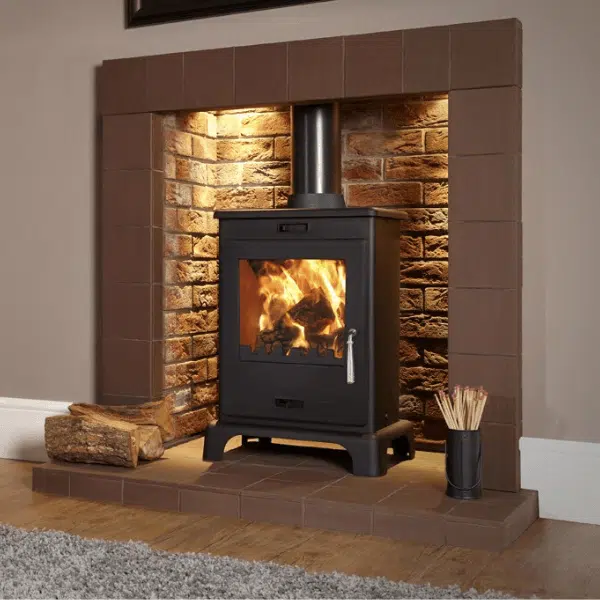
How to Choose the Best Firewood for Your Stove or Fireplace
Using the right type of firewood in your stove or fireplace is essential for safety, efficiency, and compliance with UK legislation. While it may be tempting to burn any wood you find, there are clear guidelines on what you should – and shouldn’t – use. As experts in Norwich fireplace installation and in wood burning stove installation, we’ve put together this guide to help you choose the best firewood for clean, efficient and safe heating.
What is the Best Firewood?
We recommend hardwoods such as maple, oak, ash, birch and most fruit trees. These woods provide a longer burn, hotter fire and cleaner handling, as they contain less pitch and sap. Before selecting firewood, it’s important to understand the difference between hardwood and softwood.
Hardwoods are dense, burn slowly, and release the most heat thanks to their high BTU (British Thermal Units) content. Popular choices include oak, ash, birch, beech, hickory, pecan, apple, and maple.
Softwoods are quick to ignite and ideal as starter wood, but they burn faster and leave fewer embers. Options include fir, spruce, pine and cedar. Many homeowners use softwoods to start the fire, then switch to hardwoods for long-lasting heat.
What Firewood Gives Off the Most Heat?
The higher the BTU rating, the more efficiently the wood will warm your home. Hardwoods such as sugar maple, ash, red oak, beech, hickory and apple offer the best heat values. Your stove’s efficiency also depends on correct sizing – see our guide to choosing the right size stove for your home.
How Do I Know Which Firewood is Best?
The best firewood is always seasoned, meaning it has been properly dried to reduce moisture content. Seasoning typically takes 6–12 months depending on the wood type.
What Moisture Content Should Wood Be?
UK law requires that firewood sold must have a moisture content of 20% or less. Properly seasoned wood produces less smoke, minimises chimney deposits, and complies with the Ready to Burn legislation, which bans the sale of wet wood and house coal.
The Best Kindling to Use
Kindling should be very dry and brittle so it ignites easily. High-quality kindling is often made from softwoods such as poplar, cut into small pieces. Using the right kindling helps your main logs burn hotter and longer – avoid relying on newspaper or treated cardboard.
What Not to Burn in a Wood Burner
Never burn rubbish, painted or preserved wood, or green (unseasoned) logs in your stove. These materials can release harmful fumes, create excess smoke, and cause creosote build-up in your chimney, which is a fire hazard. For long-term safety, book regular chimney sweeping and stove maintenance with a company who are experienced in servicing wood burners in Norfolk.
Can I Burn Pallets?
No. Pallets and other scrap wood are often treated with chemicals or preservatives and can release toxic fumes when burned. They may also have been exposed to spills or contaminants during use.
Other Materials You Shouldn’t Use
Do not burn cardboard, plastics, or any materials with inks, waxes or paints. These produce dangerous pollutants and can damage your stove or fireplace.
Choose Your Fireplace or Stove with Incendium
At Incendium, we supply and install a wide range of wood burning stoves, multi-fuel stoves and cast iron fireplaces, alongside professional wood burner stove installation in Norwich and comprehensive aftercare services.
For advice on the best stove or fireplace for your home – and to ensure your heating is safe, efficient and compliant – get in touch with our team today to book a free consultation.